The Difference Between a Team and a Group of Individuals

It’s easy to assume that a team and a group of individuals are the same thing, but there’s a key difference: intentional collaboration. But there is a fundamental difference. A group of individuals is simply a collection of people working together, often with individual goals and responsibilities. Each person might be working on their own tasks, and while they may share a common purpose, there’s little to no collaboration or interdependence.

On the other hand, a team is a cohesive unit that works together towards a common goal. Teams share knowledge, support each other, and work collaboratively to achieve something greater than the sum of their individual efforts. Team members hold each other accountable, leverage each other’s strengths, and have a collective sense of responsibility.

Teams outperform groups of individuals for several reasons:

Collaboration over competition – Teams thrive on sharing ideas and solving problems together, leading to innovative solutions.

Accountability – Team members depend on each other, which encourages mutual accountability and a stronger commitment to success.

Synergy – Teams combine diverse skills, experiences, and perspectives to tackle challenges more effectively than individuals could on their own.

Teams are essential for fast decision-making, continuous improvement, and delivering high-quality outcomes.

So, let’s have a look. Are you a team or a group of individuals?

Answer the following questions on a scale of 1 to 5 (1 = Not at all, 5 = Always):

    1. Do team members actively collaborate and share ideas?
    2. Are individual contributions aligned towards a common goal?
    3. Is there accountability among team members for the success of the team?
    4. Does the group leverage the diversity of skills within the team?

Scoring:

    • 16–20: You have a strong team! Collaboration, accountability, and shared goals are in place.
    • 11–15: Your group is on the right track but could benefit from more intentional collaboration and alignment.
    • 4–10: You have a group of individuals who may need guidance in forming a more cohesive team.

Fostering teamwork is the key to greater efficiency and success. A true team doesn’t just work together; they grow together.
Five books every Agile leader should read before they start Agile transformation

To continue my with my book recommendations (check Five books every ScrumMaster should read and Five books every Product Owner should read), I have several books here, I would recommend every Agile Leader and manager in Agile Organization to read before they start Agile transformation. It’s a mix which will help you to understand Agile Leadership, Agile Organization, it’s structure, design, and culture and allow you to adapt to the different leadership style. Enjoy reading 🙂

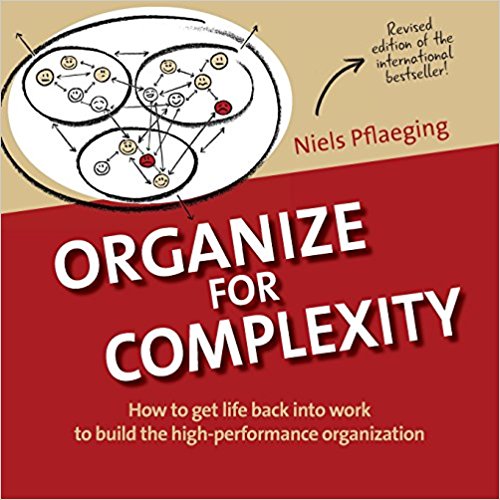
  1. Niels Pflaeging – Organize for Complexity: How to Get Life Back Into Work to Build the High-Performance Organization is about complexity and work – and about how to deal productively with both. A condensed introduction to the theory and practice of organizational high performance. A manifesto for contemporary leadership and profound transformation in organizations of all kinds. It is “practically theoretic”, featuring cutting-edge insight. It proposes new language and thinking for a new way of work and organizations.
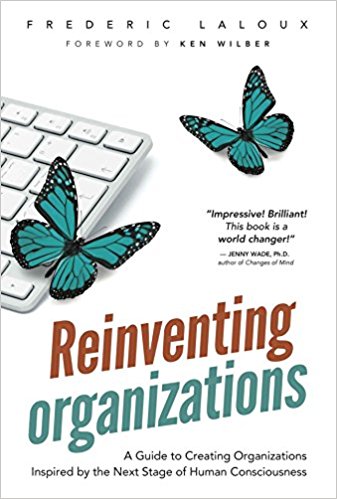
  2. Frederic Laloux – Reinventing Organizations is a must. The way we manage organizations seems increasingly out of date. Survey after survey shows that a majority of employees feel disengaged from their companies. The epidemic of organizational disillusionment goes way beyond Corporate America-teachers, doctors, and nurses are leaving their professions in record numbers because the way we run schools and hospitals kills their vocation. Government agencies and nonprofits have a noble purpose, but working for these entities often feels soulless and lifeless just the same. All these organizations suffer from power games played at the top and powerlessness at lower levels, from infighting and bureaucracy, from endless meetings and a seemingly never-ending succession of change and cost-cutting programs.
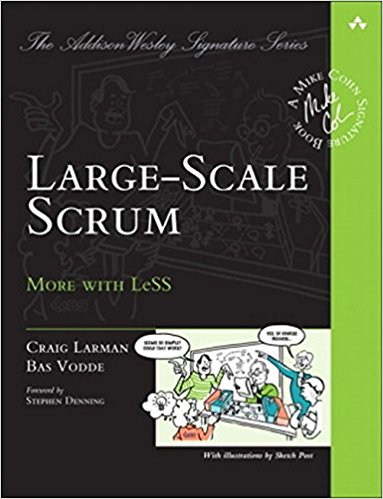
  3. Large-Scale Scrum: More with LeSS is looking at the organizational design from a different perspective. Rather than asking, “How can we do agile at scale in our big complex organization?” a different and deeper question is, “How can we have the same simple structure that Scrum offers for the organization, and be agile at scale rather than do agile?” This profound insight is at the heart of LeSS. In Large-Scale Scrum: More with LeSS, Craig Larman and Bas Vodde have distilled over a decade of experience in large-scale LeSS adoptions towards a simpler organization that delivers more flexibility with less complexity, more value with less waste, and more purpose with less prescription.
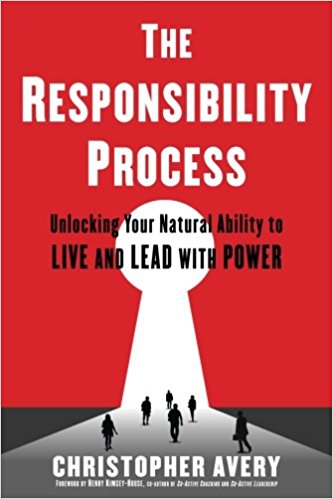
  4. The Responsibility Process: Unlocking Your Natural Ability to Live and Lead with Power is about FREEDOM, POWER, and CHOICE. Leadership is innate. The Responsibility Process proves it. The Responsibility Process is a natural mental pattern that helps you process thoughts about taking or avoiding responsibility. How you navigate it determines whether you are leading toward meaningful results or just marking time. This book gives you precision tools, practices, and leadership truths to navigate The Responsibility Process and lead yourself and others to freedom, power, and choice.
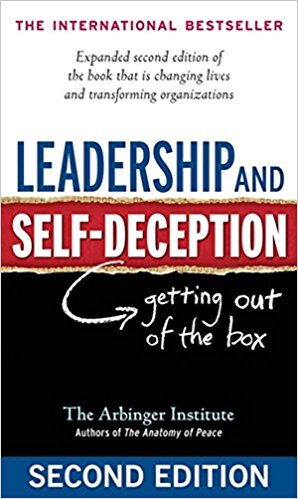
  5. Leadership and Self Deceptions shows how most personal and organizational problems are the result of a little-known problem called self-deception. Through an entertaining and highly instructive story, Leadership and Self-Deception shows what self-deception is, how people get trapped in it, how it undermines personal achievement and organizational performance, and- most importantly the surprising way to solve it.

BONUS:

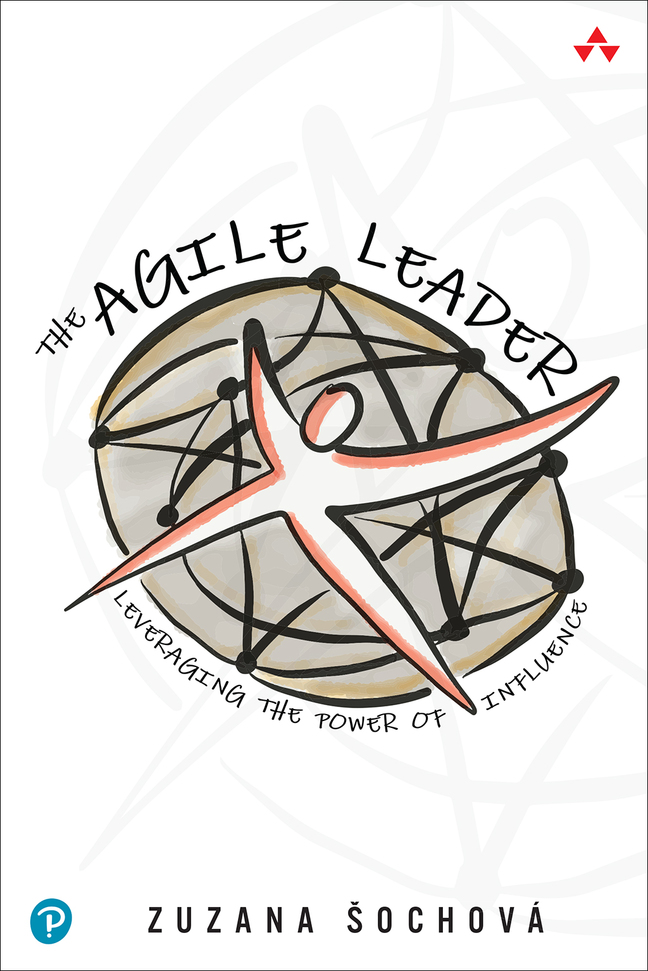
Finally, there is a bonus book which I wrote a few years after this blogpost 🙂 The Agile Leader: Leveraging the Power of Influence Book published in December 2020 will help you to unleash your agile leadership potential and guide your entire organization toward agility. It’s a great overview of concepts for managers, directors, executives, and entrepreneurs―anyone, regardless of position, who’s ready to take ownership, challenge the status quo, and become a true agile leader. See more at https://greatagileleader.com.