Managers are very often asking me who is driving the agile transformation and expecting some special position like VP of Agile or Chief Agilist. To their surprise, there is no such position needed. I already wrote here about Agile Organizations and hierarchy. Real Agile Organizations are flat and lean, so they don’t create any new position for a problem, issue or initiative. In Agile Organizations, we already have ScrumMasters to introduce change.
“If you want to drive Agile transformation, you need to become ScrumMaster.”
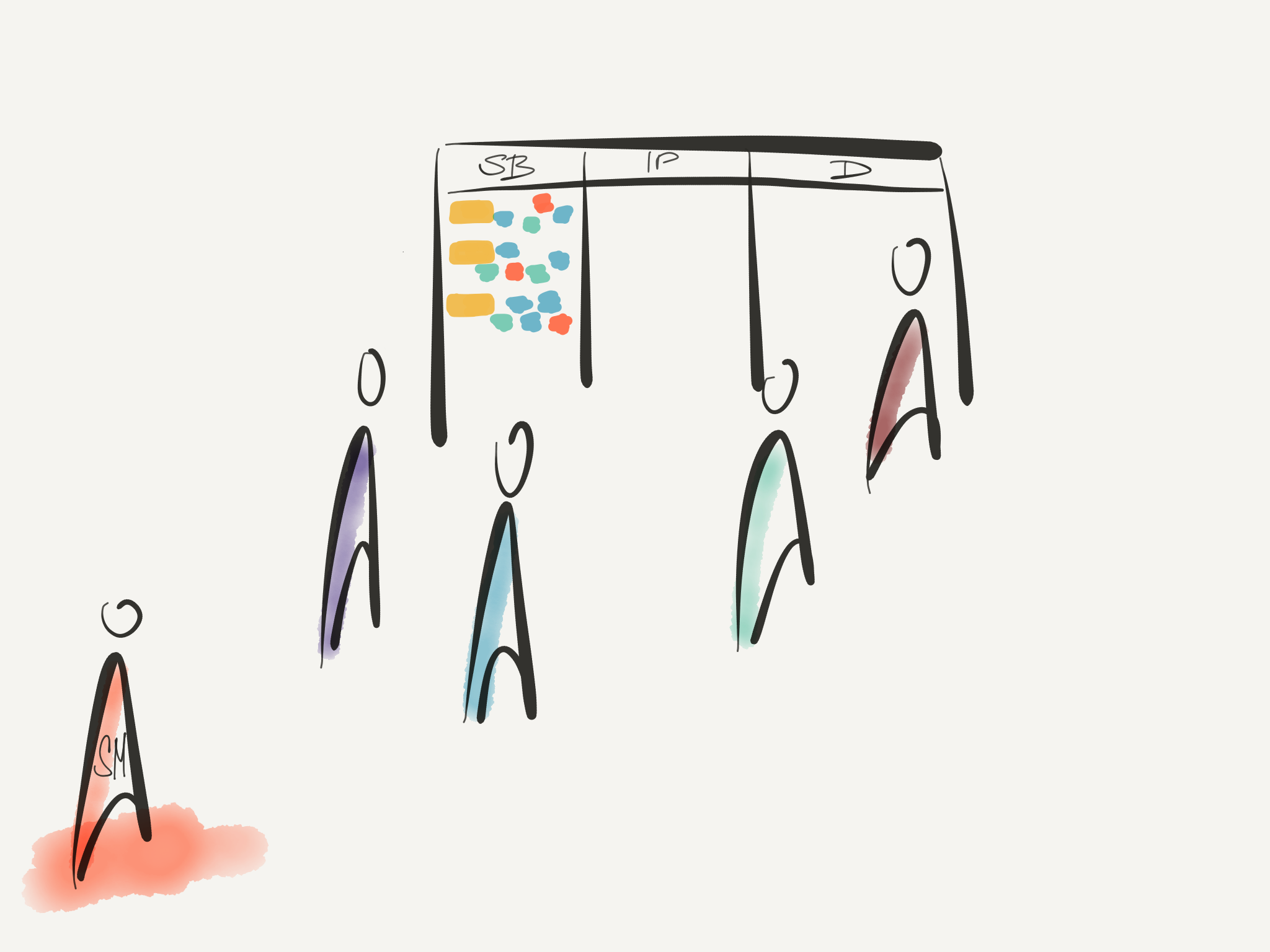
It’s simple and straightforward. We don’t need another role, we don’t need another layer. Referring to the #ScrumMasterWay model, ScrumMasters are not only responsible for growing great self-organizing teams (My Team level), helping the ecosystems around their team to be self-organized (Relationship level), but also helping the entire organization to be self-organized (Entire System) and embrace agility at all layers. Scrum Masters competencies cover not only agile, business, and technical practices, but are also responsible for driving a change because, at the end of the day, agile brings significant change, new culture, a new way of working.
ScrumMaster is a leadership role, so it’s a good fit for managers who want to make a difference in the organization, who care about helping others to become leaders, who are passionate about changing culture, who are Catalysts. ScrumMaster is a Servant leader. They are not having any positional power, they can’t tell people what to do. But they have an influence. They can coach and facilitate to unleash the potential, helping people to find their own way of working. That’s what self-organization is about in the first place, that’s what agile transformation is about.
I recently posted a quote from a conference saying that “Removing hierarchy and cross-team dependencies made space for strong collaborative teams.” Interestingly, I got many comments and questions about it. So let’s talk about hierarchy and why we don’t need it in Agile space.
But before we dive deeper… What is the hierarchy? – using dictionary definition: “Noun – a system in which members of an organization or society are ranked according to relative status or authority.”
Traditional Organizations Need Hierarchy
Organizations where employees are ‘ranked according to relative status or authority’ is what we inherited from the traditional organizational paradigm which is built on top of the belief that hierarchy is the key – every organization needs to have an org chart, we have to have a clear line of reporting and decision making. And I’m not saying it’s wrong, you can keep all the traditional practices like a career path, positions, performance reviews, KPIs, etc. however such organizational design is not what I’m interested in and has nothing to do with ‘being agile’. Traditional organizations might be still well functioning, applying some frameworks and ‘do agile’, but the mindset at the organizational level is just not there yet.
Agile Organizations Are Flat
What I’m interested in is applying an agile mindset at the organizational level. Help not only individuals to ‘be agile’, but the organization as well. Agile is fundamentally changing the way organizations operate. Agile organizations are built on a new paradigm. They have a team as the key building block and are forming collaborative, creative, and adaptive networks from them. In a team, we don’t have status, and we have no ranking either. All team members are peers, with no positional hierarchy and power. Indeed, you can gain respect from the other team members in a team, but you can also lose it if you don’t bring value to the people around you anymore. It’s flexible and dynamic. All you need is radical transparency, peer feedback, and honest culture with implicit trust. You might say it’s a lot, and I’m far from saying it’s easy. However, once you experience it, you never want back to the traditional world.
Who decides on the process? Teams. In a flat organization, they are not only self-organized, but self-managed (so they are responsible for the processes), self-designing (so they are designing teams), and self-governing (so they are setting overall direction). To get more insights on those terms, see how LeSS defines them. All over, you don’t need much more than what I already mentioned – transparency, feedback, and trust. If that’s too abstract, you can get inspired by Sociocracy 3.0. It will give you more ideas on how to get there.
Who set’s the goals and objectives? No one. They are co-created by the teams, reviewed through radical transparency, and inspected and adapted via frequent feedback to flexibly address the business challenges. At the end of the day, fixed goals are useless in the VUCA world. VUCA stands for volatility, uncertainty, complexity, and ambiguity. In other words, we speak about the world which is not predictable anymore. The cascading goals neither unify nor motivate. The more decentralized and autonomous the organizations are, the higher need is there for a strong evolutionary purpose. Co-created and owned by all. Transparent. You can get inspired by Frederic Laloux’s work.
What about budgets? Who says we need to have a budget in the first place. Again, you don’t need much more than what I already mentioned – transparency, feedback, and trust. Make all the finances transparent, and use instant peer feedback to review it. If that is too radical, you can get inspired by Beyond Budgeting.
All over, I guess you got the pattern. In an agile flat organization, we don’t need most of the traditional practices. All we need is radical transparency, peer feedback, and honest culture with implicit trust. No one is saying that you have to turn your organization into a flat structure and an agile mindset. But if you want to do that, be ready to redesign the way you work entirely.
Note: I’m updating the tips based on my learning and questions people ask.
I had never been any fan of the virtual world. I mean emails are fine, they are relatively private and wait in your mailbox until you have time to answer. Better than calls. But otherwise? No way. I was using all social networks just one way, mostly posting and not reading much. I didn’t like teleconferences, I would rather travel for a day there and back to talk instead. However, life had changed and now, I have no other choice.
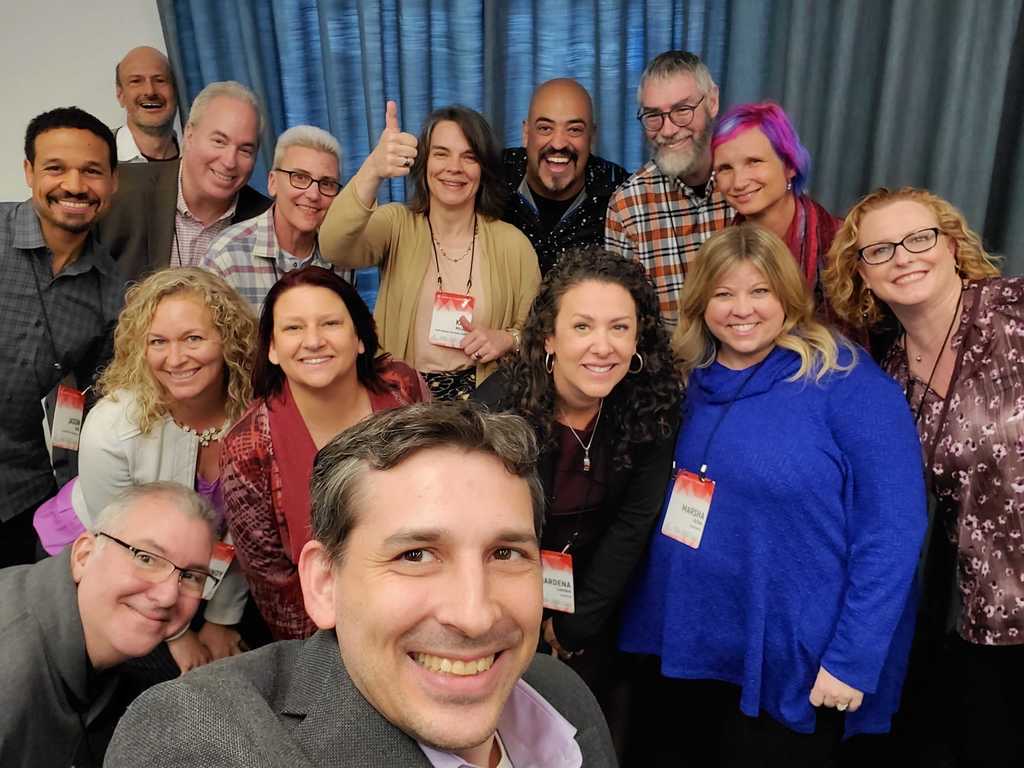
Last week I was at the Business Agility Conference in NYC. Kudos to all who show up at this time. The conference went half virtual and I learned that at the end of the day, I like changes. “Responsiveness to change over following a plan”, right? I don’t think I’d ever experienced anything like that. The program changed in a way that all backups already became the reality and the program team was still able to find another one. They were awesome. We lost half of our facilitators on-site, transforming them into a virtual stream with over 100 participants who were not allowed to travel anywhere anymore, and I feel I need to appreciate the flexibility in this crazy time. Thanks, everyone. There was not a day last month when something had not changed. There was not an hour day before the conference something had not changed, and when the second day they announced closing borders for all Europeans and declare the state of emergency… there was not a minute when something would not change. To be honest, I was happy the conference is over just on time for me to get home before they lock me somewhere on the way.
That’s the background for going virtual with all my work. When I can be embracing all the changes, I can stretch it even more and try virtual classes. As the entire world stopped, it’s time to try it. There is nothing else you can do anyway… So I thought I will share a few learning points about it.
#1: You need to see everyone
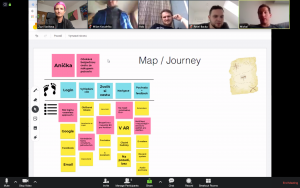
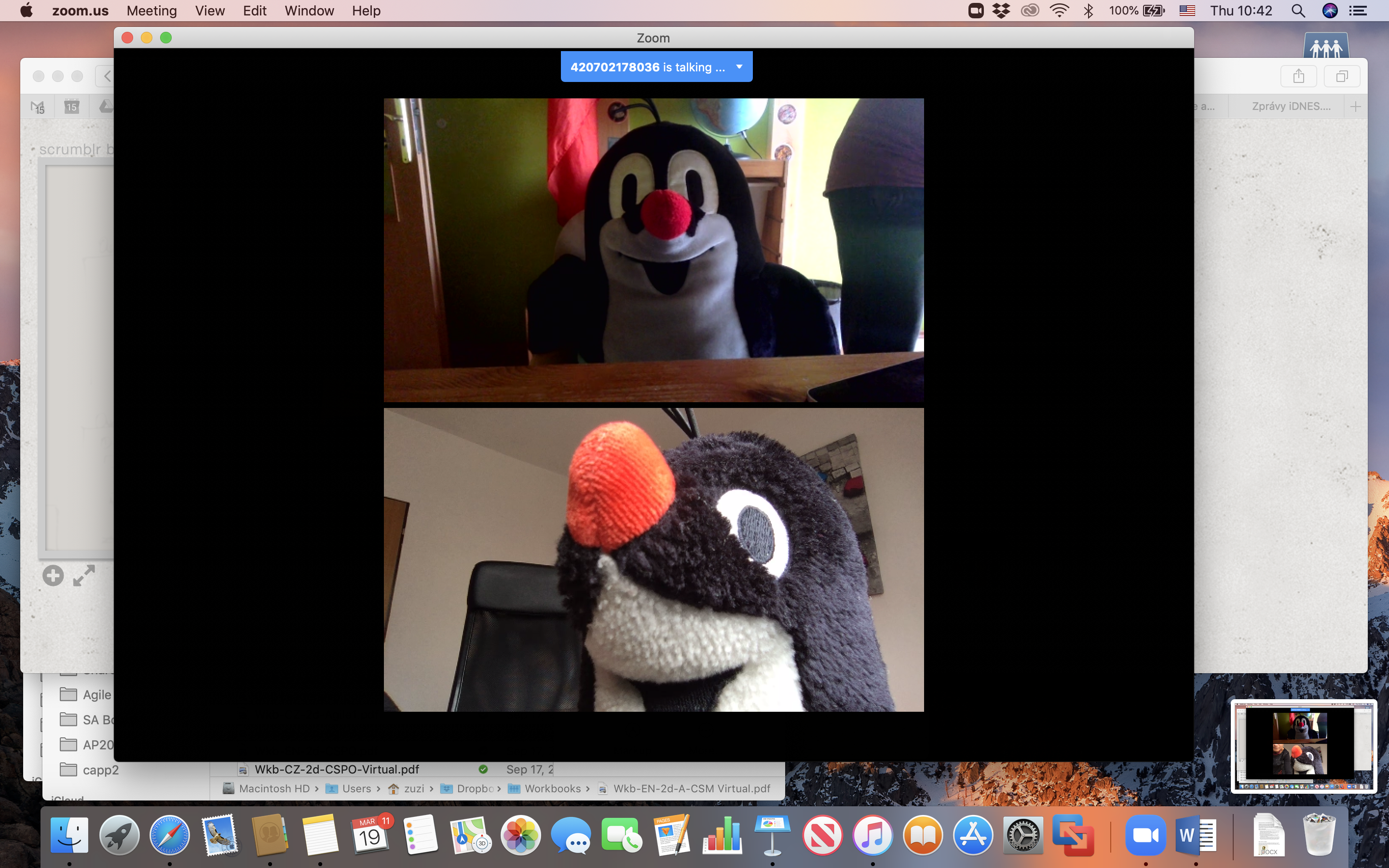
Good video conferencing is important. I’m using Zoom and I try to see the gallery view most of the time. It’s not like face to face, but it’s not bad either.
#2: Breakout rooms
Participants need time for themselves. To chat without all class listening, share their experiences, be by themselves. You can always go for a visit and join a breakout room, but the time they are on their own is critically important for people. I was even giving them 3m individual room for individual preparation.
#3: Flexible tools
I’m using GoogleDocs – Sheets and Docs for collaboration. It might not be fancy but it’s simple and flexible. You can do most of the things there. I realized the biggest pain in using tools is the barrier with login and accounts, so I’m currently just sharing a link that gives anyone with the link right to edit.
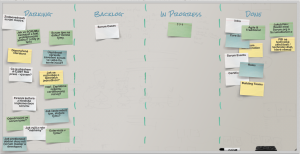
Sometimes I felt a need to use the board. I love Trello, but you need to have an account. I’m using scrumblr.ca free tool which only uses the link. Again, I optimize for flexibility and choose simply to access and use tools.
I learned that Google has an awesome board called Jamboard. It’s flexible and has apps for both iPhone and iPad, and the ability to export as PDF so you can share the result of the collaboration with everyone.
#4: Training from the back of the room
I learned that Training from the back of the room gives you all you need. I organize most of my Agile training this way. Participants are working in Sprints, they have the task/question/exercise in their workbook, which helps them stay focused and give them plenty of time working with their peers in breakout rooms.
#5: Flipcharts
Instead of drawing on a flipchart, I’m using the Paper application on my iPad, so don’t worry, you won’t miss my drawings 🙂 With Zoom it’s very simple. You can share iPhone/iPad via cable and get the entire screen online in a shared window. At the end of the class, you can create a nice pdf with all the pictures.
#6: Breaks
You need more frequent longer breaks. We end up having 15min break every hour in the afternoon plus one in the morning. It’s a good idea to design with participants that they are not checking on emails, chats or news during the class. They can do it over the breaks or lunch. I would say it’s more important than in face to face setup.
#7: Have fun
All over I realized I’m enjoying it. Do something crazy, it will create a positive distraction. Don’t be afraid to experiment, have fun.
Summary
I created this video showing more about tips on Virtual training. I hope you will find it useful.
I travel & speak at many conferences each year. Here is my list of TOP 10 conferences you shall attend in 2020:
#1: Business Agility 2020 Conference (New York, USA) March 11-12 2020. Agile is not about frameworks, practices, and tools, but the mindset. This conference brings stories from executives, practitioners, and thought leaders. It has a very innovative format – three short industry experts’ talks are followed by a facilitated conversation around tables. This conference is very unique, don’t miss it.
#2: Agile Prague Conference (Prague, Czech Republic) – September 14-15, 2020. This year it’s the 10th anniversary of this popular conference. An awesome program, a collaborative atmosphere of open space format, good value for money. Postponed to 2021.
#3: Agile 2020 (Orlando, FL, USA) July 20-24, 2020. Top Agile conference for the size and speaker selection. It’s always worth the visit as you can meef there every agilist 🙂 Canceled.
#4: ACE! (Krakow, Poland) – May 20-22, 2020. Innovative form & great atmosphere. Focusing not only on building software better but also building better products including UX design. Rescheduled to September 16-18, 2020.
#5: Agile Austria (Graz, Austria) April 29-30, 2020 – a great place to meet Agile enthusiasts. Have fun with games and workshops. Postponed to 2021.
#6: Global Scrum Gathering NYC (New York, NY, USA) May 11-13, 2020 Scrum Gatherings are great places to talk to Scrum practitioners, join coaches clinic, get hands-on experience on your agile journey. The Gathering is not just about Scrum, it’s about sustainable agility. Canceled.
#7: Agile Iowa (Cedar Rapids, IA, USA) April 30, 2020 – Great local conference organized by the community, join the first year of this conference and be there from the beginning.
#8: Agile Testing Days (Potsdam, Germany) November 8-13, 2020. Interesting keynote speakers, deep insights in testing. And it’s always fun to be there.
#9: Agile Tour Vilnius (Vilnius, Lithuania) October, 2020 – enjoy the day full of fun. Great community, enthusiastic audience.
#10 Beyond Agile Israel 2020 – January 26, 2020, Tel Aviv, Israel. – Enjoy warm weather in the middle of winter. Great program in just one day.
The selection is based on my personal preference and experiences from those events.
Recommended virtual conferences this year:
Agile100 – May 29, June 26, and July 31, …2020, 12pm – 10pm (CET – Central European Time) / 6am – 4pm (ET – Eastern Time) … more days are coming
LeSS Day Europe 2020 – June 15 – 17, 2020 3pm – 7pm (CET – Central European Time) / 10am – 14pm (US Eastern Time)

 Good video conferencing is important. I’m using Zoom and I try to see the gallery view most of the time. It’s not like face to face, but it’s not bad either.